Broken Key Stuck in the Lock? Here's What to Do (and What to Avoid)
Few things trigger panic faster than turning your key and feeling it snap in half — half still in your hand, half now stuck somewhere inside the lock or ignition. It happens in driveways, on front porches, and in parking lots all over the Bay Area, usually at the worst possible moment: right before work, late at night, or in the pouring rain. The good news is that a broken key stuck in a lock is almost always fixable without replacing the entire lock or ignition. The key (pun intended) is knowing what to do — and just as importantly, what not to do — in the minutes right after it happens.
This guide walks through why keys break in the first place, the safe steps you can try yourself, the mistakes that turn a simple fix into an expensive one, and when it's time to call a professional for broken key extraction.
Why Keys Break in Locks in the First Place
Understanding the cause helps you avoid a repeat performance. Most broken keys come down to one of these:
- Metal fatigue. Keys flex every time you use them, and repeated stress, especially on older or cheaply cut keys, creates microscopic cracks that eventually give way.
- Worn or damaged locks. A lock with worn pins, debris inside, or a misaligned strike plate forces you to wiggle and force the key, which multiplies the strain right at the weakest point — usually the shoulder near the head.
- A poor-quality or duplicate key cut. Copies made from a low-grade key blank, or a duplicate of a duplicate, are often thinner or slightly misshapen and snap more easily than the original.
- Using the wrong amount of force. Yanking a key out at an angle, or trying to force a key that wasn't fully seated, is one of the most common causes of a key broken inside a lock.
- Temperature extremes. Cold weather makes metal more brittle, and a stiff lock combined with a quick twist on a chilly morning is a classic recipe for a snapped key.
- Corrosion and rust. Older deadbolts and ignition cylinders that haven't been lubricated in years build up internal friction, which puts extra load on the key every time it turns.
Knowing this also tells you something useful: if your key just broke, there's a good chance the lock itself isn't in great shape either, which is why lock repair often goes hand-in-hand with extraction.
What To Do Right Away
1. Stop Turning and Stay Calm
The instant you feel resistance or hear a snap, stop. Don't keep turning, wiggling, or pulling. Every additional movement can push the broken piece deeper or wedge it sideways, which turns an easy extraction into a harder one.
2. Assess How Much Key Is Exposed
Look at how much of the broken key is still sticking out of the lock. If there's a visible piece protruding, you may be able to grip and remove it. If the break happened flush with the cylinder, or the piece has slipped inside, you'll need tools designed for broken key extraction rather than your fingers.
3. Try Needle-Nose Pliers (Carefully)
If enough of the key protrudes, needle-nose pliers can sometimes grip it well enough to pull it straight out. Key details:
- Pull straight out, in exactly the same line the key would normally travel — never at an angle.
- Don't rock the piece side to side; this can shear it further or push it deeper.
- If it doesn't move with gentle, steady pressure, stop. Forcing it risks snapping the piece again or damaging the pins inside.
4. Use a Broken Key Extractor Tool
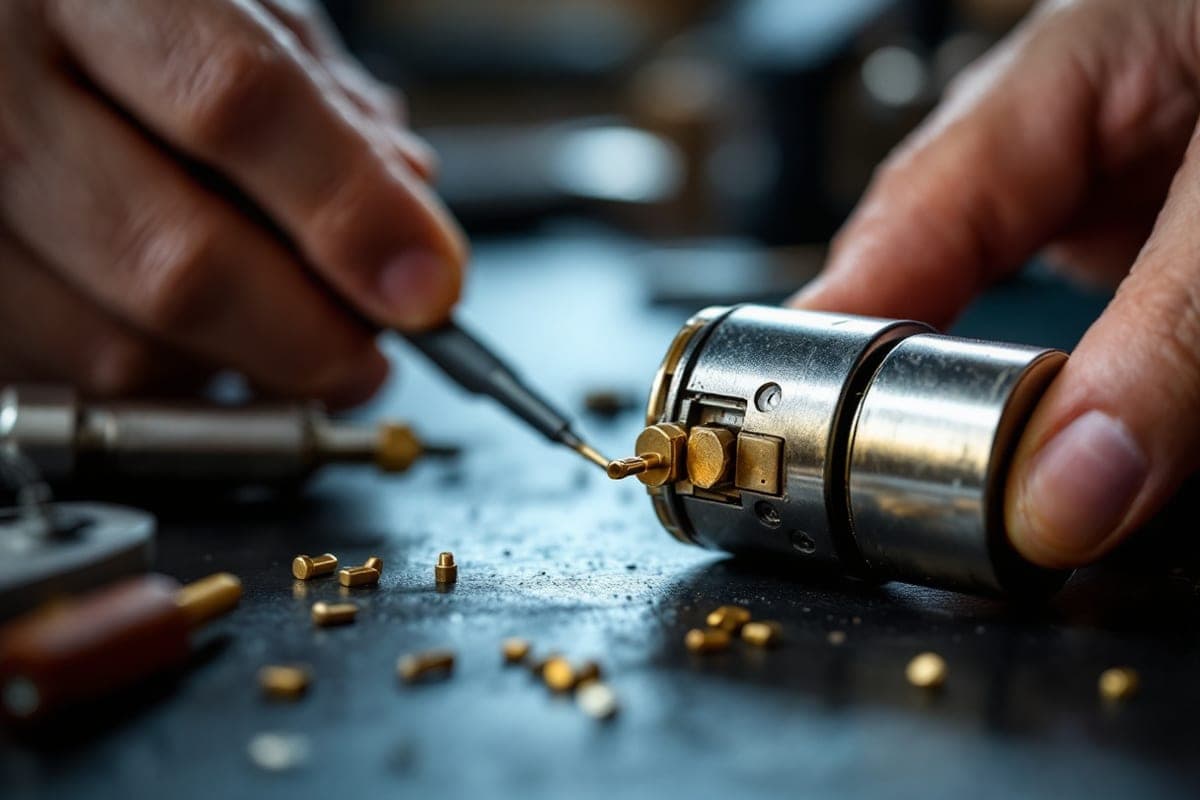
Locksmiths use purpose-built extractor tools, but small kits are available for home use. A jigsaw-style or hook-style extractor is inserted alongside the broken key, rotated to catch the grooves (the same grooves cut into the key itself), and then withdrawn to pull the fragment out. This is the closest DIY method to what a professional does, but it takes a steady hand and some patience — rushing it is how people push the piece in deeper.
5. Try a Thin Adhesive Method as a Last Resort
Some people have success applying a small dab of super glue to the flat end of a spare key (not the broken piece) or a thin rod, gently touching it to the exposed end of the broken key, letting it set for a few seconds, and pulling straight out. This is genuinely a last resort — used incorrectly, it can glue the mechanism itself, which turns a key problem into a full lock repair.
What to Avoid
Certain instincts make sense in the moment but almost always make things worse. Avoid these:
- Don't use excessive force. Forcing a stuck key or a jammed door lock rarely works and usually shears more metal off inside the cylinder.
- Don't spray in random household products. WD-40 and similar oil-based lubricants can attract dust and debris over time, gumming up the internals. If you lubricate at all, use a graphite-based or lock-specific lubricant, and only after the broken piece is out.
- Don't drill into the lock yourself. Drilling is sometimes a legitimate last-resort technique — but it's one that should be done by a professional who knows exactly where to drill to avoid destroying the cylinder or, worse, the ignition switch.
- Don't try to fish it out with random tools. Tweezers, safety pins, and paperclips can push the fragment further into the mechanism, especially in a deadbolt where the pin stack sits deeper than people expect.
- Don't ignore the underlying cause. If a key broke because the lock was already sticky, corroded, or misaligned, simply removing the fragment doesn't fix the lock not turning issue — it'll likely happen again with your replacement key.
Broken Key Stuck in the Ignition: A Different Animal
A key stuck in ignition is a more delicate situation than a door lock. Ignition cylinders are more complex, often tied into steering column locks and, in many newer vehicles, an anti-theft chip system. If your ignition key won't turn and then snaps:
- Don't try to start the car with a broken key. Even if a piece is still turnable, forcing it risks breaking the ignition cylinder itself, which is a far more expensive repair than the key.
- Avoid pliers inside the ignition unless a substantial piece is protruding and easy to grip — ignition cylinders are recessed and easy to damage.
- Check the steering wheel position. Sometimes an ignition key won't turn simply because the steering wheel is under lock pressure. Wiggling the wheel gently (not the key) while trying to turn can sometimes free a stuck-but-unbroken key — but if it's already snapped, skip straight to calling a mobile locksmith who handles automotive extractions.
- Don't call a dealership expecting a quick fix. Dealerships typically don't offer emergency locksmith services and may require the vehicle to be towed in, which costs time and money a mobile locksmith visit usually avoids.
Automotive extraction is one of the more common calls we get precisely because ignitions are unforgiving of DIY attempts — the tolerances are tighter, and mistakes are pricier to fix than with a household lock.
Jammed Door Locks and Deadbolts: When It's More Than Just the Key
Sometimes what looks like a broken key situation is really a symptom of a jammed door lock or a deadbolt that's needed repair for a while. Signs your lock (not just your key) is the real problem:
- The key has always been hard to insert or remove, even before it broke.
- The deadbolt bolt doesn't extend or retract smoothly, or scrapes against the strike plate.
- You've had to jiggle or wiggle the key to get the lock to catch in the past.
- The lock is old, exposed to weather, or hasn't been serviced in years.
If any of that sounds familiar, plan on deadbolt repair or a full lock replacement once the broken key is out. Extracting the fragment without addressing the underlying wear just sets you up for a repeat incident, often within weeks.
When to Call a Professional Locksmith
DIY methods work in plenty of cases, especially when a good length of key is exposed and the lock itself is in decent shape. Call a professional for broken key extraction when:
- The break is flush with the lock face and there's nothing to grip.
- You've already tried once and the fragment moved deeper.
- It's your ignition key, not just a door or deadbolt.
- The lock has a history of sticking, jamming, or not turning smoothly.
- You're locked out entirely and the broken key is the only one you have.
- You don't have the right tools and don't want to risk damaging the cylinder.
A licensed, experienced locksmith carries extraction tools built for exactly this job, along with the lock-specific knowledge to know how much pressure a given cylinder can take before something else breaks. In most cases, extraction takes just a few minutes once the right tool is on the fragment — a stark contrast to the hour (or more) of frustration that DIY attempts can turn into.
How Chida Locksmith Can Help
Chida Locksmith is a licensed, bonded, and insured mobile locksmith serving the entire San Francisco Bay Area, available 24/7 for exactly these kinds of emergencies. Whether it's a broken key removal from a front door deadbolt, a jammed door lock that finally gave out, or a stubborn ignition key won't turn situation in your driveway, our technicians come to you with the tools to extract the broken piece cleanly and, if needed, cut a fresh key or handle lock repair on the spot. We're based in Fremont, CA, and dispatch mobile units throughout the greater Bay Area, so you're not stuck waiting on a locksmith who has to drive across the bridge.
Frequently Asked Questions
Can I remove a broken key from a lock myself?
Often, yes — if enough of the key is exposed to grip with needle-nose pliers or a small extractor tool, and you pull straight out without forcing it. If the break is flush with the cylinder or the fragment has already moved, it's safer to call a locksmith rather than risk pushing it deeper.
Will extracting a broken key damage my lock?
Not if it's done carefully. Using the wrong tool, forcing the fragment, or drilling without knowing what you're doing can damage the pins or cylinder. Professional extraction tools are designed to grip the key's grooves without putting stress on the surrounding mechanism.
What should I do if my key breaks off in my car's ignition?
Don't try to force it or start the car. Avoid using pliers unless a substantial piece is easily gripped, and don't attempt to drill the ignition yourself. Call a mobile locksmith experienced with automotive ignitions — they can extract the piece and cut a replacement key on-site in most cases.
Why does my lock feel stiff or hard to turn even before a key broke?
A lock not turning smoothly is usually a sign of worn pins, internal debris, corrosion, or a misaligned strike plate. That resistance is exactly what causes many broken keys in the first place, so it's worth having the lock serviced rather than just replacing the key.
Is it cheaper to replace the whole lock or repair it after a broken key extraction?
In most cases, repair is cheaper — once the broken key is removed, a locksmith can often service the existing cylinder, re-key it, or make minor adjustments rather than replacing the entire deadbolt. Full replacement is usually only necessary if the lock was already failing or significantly damaged.
Get Help Now
A broken key doesn't have to ruin your day. If you're dealing with a key stuck in a lock, an ignition that won't cooperate, or a deadbolt that needs professional attention anywhere in the Bay Area, Chida Locksmith is available 24/7 to come to you. Call (510) 690-5660 for fast, reliable broken key extraction and lock repair from a licensed, bonded, and insured mobile locksmith you can trust. </markdown> </invoke>
Need a locksmith in the Bay Area?
Chida Locksmith is available 24/7 with fast mobile service and upfront pricing.
(510) 690-5660